
Rowlett, TX · Garage Door Service
Why a Garage Door Goes Off Track Here in Rowlett
Rowlett homes built mostly between 1973 and 2013 share the same aging track hardware. Here's what actually knocks a door off track and why heat makes it worse.
- Repairs & new doors
- Springs & openers
- Serving 7 nearby communities
What to Look At First
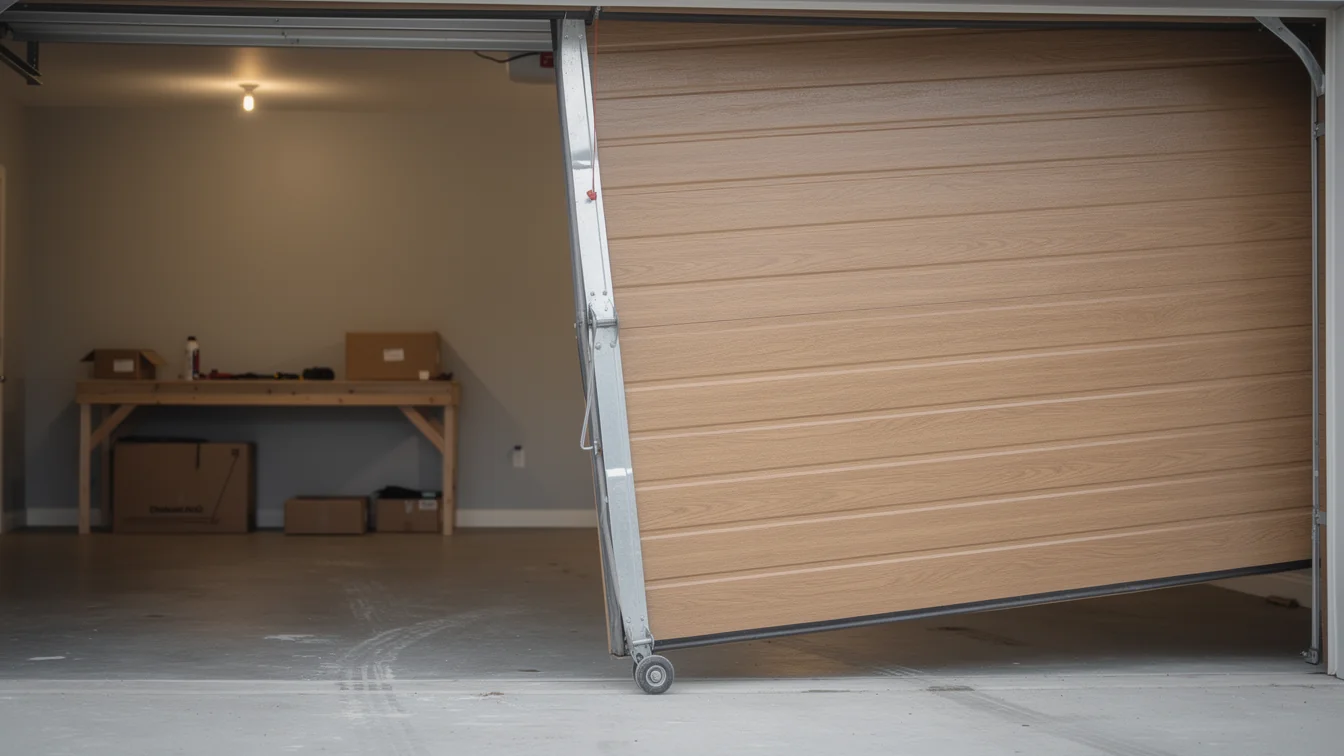
Before you touch anything, look at where the door actually left the track. A gap at the bottom roller means something different than a bent section up near the top bracket. Most garages in Rowlett went up between 1973 and 2013, with the median build year sitting around 2003, which means a lot of the hardware you're staring at is original builder-grade steel - not something added later.
Check the rollers first. On a door that age, the nylon or steel rollers are usually the first part to wear thin, and a worn roller rides loose in the track instead of rolling true. Next look at the track brackets bolted to the framing - on 2000s-era construction these are usually a lighter gauge than what gets installed today, and loose lag screws let the whole track shift sideways under load.
Don't force the door closed if it's hanging crooked in the track. That's how a bent track becomes a track that needs full replacement instead of a repair. One honest limit here: if the track itself is bent or crimped, straightening it rarely holds - we'll tell you when it's a swap, not a bend-back, even if that's not what you wanted to hear.','
What Local Conditions Do
Rowlett sits in a moderate-heat climate band, and that matters more for a garage door than most homeowners expect. Steel track expands and contracts with heat, and across a 2003-median-age house, two decades of that cycling loosens the fasteners holding the track to the framing a little more every summer.
The bigger issue is lubricant. Heat breaks down grease on rollers and hinges faster than cooler climates do, and once that lubricant turns gummy, a roller starts to bind instead of roll smoothly through the track. A binding roller doesn't glide past a loose bracket - it catches, and that catch is usually the moment the door jumps the rail.
This isn't a one-time event. It's cumulative. A door that's run for twenty summers in this heat band without the track hardware being checked is carrying twenty years of expansion-and-contraction wear in brackets that were never built to be maintenance-free forever. That's the mechanism, not just a general wear-and-tear story - the heat is doing specific work on specific parts, year after year.
The Situation
Across the 22 named areas that make up Rowlett's housing stock, construction runs heavily 2000s-era, which means a big share of garages share the same hardware generation: the same gauge of track, the same style of bracket, the same original torsion or extension spring setup installed when the subdivision went in. That consistency is actually useful for diagnosing the problem - when one house in a 2003-built section has a track issue, the house two doors down built the same year is usually not far behind.
What we see most often isn't a single dramatic failure. It's a slow accumulation: a bracket that's backed out a quarter inch, a roller that's lost its bearing, a cable that's frayed just enough to pull unevenly. Any one of those alone might not knock a door off track. Together, on a door running original 2000s-era hardware, they add up fast.
The fix depends on which part failed first. Sometimes it's a bracket re-tightening and a roller swap. Sometimes the track itself is worn enough at the bend that it needs to come out. We won't know which until we're looking at the actual rail, not guessing from a description over the phone.
Season by Season
In Rowlett's moderate-heat climate band, the stress on a garage door track doesn't come in one dramatic spike - it builds steadily through the warm months. As temperatures climb, steel track expands slightly, and brackets that are already a little loose from years of that same cycle open up just enough for a worn roller to slip free of the rail.
The cooler stretch of the year is when that same hardware contracts back down, which can reveal gaps and misalignment that heat was temporarily masking. A track that looked fine in August can show a visible lean once things cool off, because the metal has pulled back to its resting shape and the loose bracket is no longer being held tight by thermal expansion.
For a 2003-median-age Rowlett garage, that means the best time to catch a track problem early is during the shoulder months, before peak heat stresses hardware that's already two decades into its service life. Waiting until the door is visibly crooked usually means the roller has already worn past the point where tightening a bracket fixes it on its own.
Frequently asked questions
Why did my garage door suddenly come off the track in Rowlett?
It's rarely sudden even when it feels that way. In a house built in the 2000s like most of Rowlett's stock, the track brackets and rollers have been cycling through two decades of summer heat expansion and winter contraction. A loose bracket plus a worn roller is usually what finally lets the door jump the rail, even though both were wearing down for years.
Is a bent track something I can fix myself?
Sometimes a light misalignment can be re-tightened at the bracket. But if the rail itself is bent or crimped, bending it back rarely holds under the door's full weight - it tends to re-bend at the same spot. We'll check which situation you're in before recommending a fix.
Does the heat really affect my garage door track?
Yes. Rowlett sits in a moderate-heat climate band, and that heat cycles the steel track through expansion and contraction every year. Over two decades of that on original builder-grade hardware, fasteners loosen and lubricant breaks down faster, which is a big part of why older doors in this area start slipping off track.
How do I know if it's the roller or the track that failed first?
Look at the roller itself - if it's worn thin, cracked, or missing its bearing, it likely wore out first and let the door wobble into the bracket. If the track shows a visible bend or the bracket is pulled loose from the framing, the hardware failed before the roller gave out. Either way, the other part usually needs a look too.
Related garage door services in Rowlett
More garage door guides
Book garage door service in Rowlett
Call now or request a quote - tell us what the door is doing and where you are.