
Rowlett, TX · Garage Door Service
Garage Door Opener Installation Around Rowlett
Garage door opener installation for Rowlett homes built 1973-2013, where original chain-drive units and Texas heat combine to wear out gears and belts early.
- Repairs & new doors
- Springs & openers
- Serving 7 nearby communities
Where This Job Goes Sideways
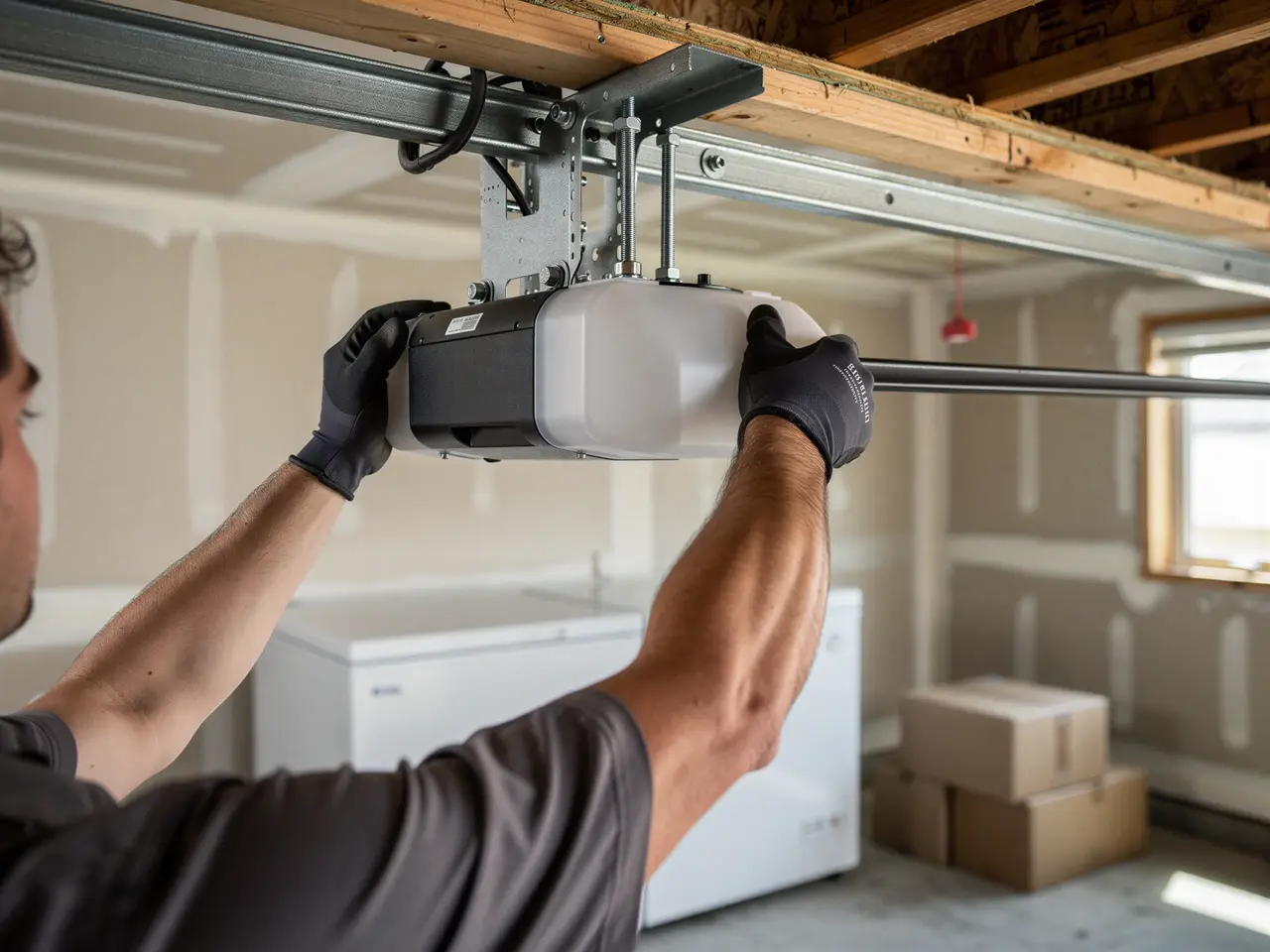
Most opener installs go wrong at the point where the old unit gets pulled and nobody checks what's left behind it. Houses in this service area were built between 1973 and 2013, with the bulk of the stock dating to around 2003. That means a lot of garages still carry the original opener bracket, the original header reinforcement, or wiring sized for a unit that's long out of production. Swap in a new opener without checking that backing and you get a motor that works for six months and then starts sagging on the rail because the header can't hold the mounting load.
The other place this goes sideways is the safety sensors. Homeowners sometimes buy a box opener online and have it installed without anyone checking door balance first. If the springs are off, even a brand-new opener will strain, trip its sensors, or reverse on its way down. The opener isn't broken. The door underneath it is doing work the opener was never built to cover. We check door balance before we mount anything, not after.
What Causes It Around Here
The climate band here runs moderate heat, which sounds mild until you factor in how many garages in this area face full sun for most of the afternoon. Garage interiors routinely run well above outdoor temps, and that heat cycle is hard on belt-drive openers in particular - the belt stretches, the drive gear wears faster, and the logic board in the opener head takes more thermal stress than it would in a shaded or north-facing bay.
Add to that the age spread of the housing stock. A home built in the early 1970s and one built in 2010 can sit three doors apart, and each needs a different approach. Older homes often have 110v outlets on a circuit shared with something else in the garage, which under-powers newer openers with battery backup and WiFi modules. Newer homes from the 2000s boom usually have the electrical capacity but came with a builder-grade opener that was never meant to run ten-plus years in Texas heat. Neither problem is unique to one house - it's a function of the stock itself.
How We Fix It
We start by pulling the old opener and inspecting the header and the rail mount, not just the motor housing. If the backing is original to a 1970s or 80s build, we reinforce it before anything new goes up - otherwise the new opener inherits the old problem. Then we check spring tension and door balance with the opener disconnected, because an opener fighting an unbalanced door will fail early no matter how good the unit is.
For homes with shared or undersized circuits, we flag it before install, not after a callback. We won't install a battery-backup, WiFi-enabled opener on a circuit that can't support it reliably - that's a job for an electrician first, opener second. If your garage runs hot through the afternoon, we'll talk belt-drive versus chain-drive with you honestly: belt is quieter but the belt itself is the part most affected by sustained heat, so it's a trade-off, not a universal upgrade.
One limitation worth saying plainly: if your door panels or track are badly out of square, a new opener will not fix that, and we'll tell you so instead of hanging a motor on a door that needs track work first.
How It Shows Up
The opener runs but the door doesn't fully close, or it closes and immediately reverses a few inches up. That's almost always a balance or sensor alignment issue showing up through the opener, not an opener defect. On older installs, you'll hear the motor straining - a labored grinding instead of a smooth hum - which usually means the header mount has loosened and the unit is flexing slightly on every cycle.
In homes with shared circuits, the symptom is intermittent: the opener works fine until something else on that circuit draws power, then the opener hesitates or the WiFi module drops and reconnects. Owners often think the opener itself is failing when the real issue is upstream. And in peak-heat months, belt-drive units that have run several seasons without adjustment will start skipping - the belt loses tension gradually, so the door's travel gets less smooth over a season rather than failing all at once.
Frequently asked questions
Can I install a new opener on my own garage door without touching the springs?
If the door is already well balanced, yes. But across this service area, where homes range from early-1970s to mid-2000s builds, spring tension drifts over time whether or not anyone's touched the opener. We check balance first because a new opener mounted on an unbalanced door will wear out early no matter how good the motor is.
Does the heat here actually affect opener lifespan?
Yes, especially for belt-drive units. The service area sits in a moderate heat climate band, and garages facing full afternoon sun run hotter than the outside air. That heat cycle stresses belts and logic boards faster than in shaded bays, which shortens the working life of the unit.
Will a new opener fix a door that won't close all the way?
Sometimes, but not always. If the issue is sensor alignment or balance, a new opener installed the same way will show the same symptom. We check the door mechanics before recommending an opener swap, and we'll tell you if the real fix is track or spring work instead.
Related services
By Neighborhood
Opener Installation across the Rowlett area
We also handle opener installation in these Rowlett-area suburbs.
Book garage door service in Rowlett
Call now or request a quote - tell us what the door is doing and where you are.