
Rowlett, TX · Garage Door Service
Garage Door Maintenance in Rowlett, TX
Seasonal garage door maintenance for Rowlett, TX homes built mostly from the 1970s through the 2010s, matched to North Texas heat and humidity year-round.
- Repairs & new doors
- Springs & openers
- Serving 7 nearby communities
Where This Job Goes Sideways
Maintenance gets skipped because a garage door doesn't fail all at once. It fails one roller, one hinge, one dry hinge pin at a time, until one morning the whole thing grinds or won't move. Most houses in this service area went up between 1973 and 2013, with the median build year landing around 2003, so a huge share of the openers and torsion springs out there are hitting the twenty-year mark at the same time. A torsion spring is rated for a cycle count, not a calendar date, but age and neglect both eat into that number. Nobody notices the slow part - the squeak that gets louder, the door that starts to hang a little crooked, the opener that strains for an extra half-second before it catches. By the time it's obvious, you're usually looking at a spring replacement instead of a lubrication and adjustment visit. The honest version of this: a yearly tune-up doesn't guarantee you won't have a spring snap on a Tuesday. It just moves the odds a long way in your favor, and it catches the cheap fixes - a bent roller, a loose bracket - before they turn into expensive ones.
What Causes It Around Here
Across the 22 named areas we track, the housing stock skews heavily toward 2000s construction, which means whole subdivisions share the same brand of opener and the same gauge of spring wire. When one hits the end of its life, the identical door two streets over usually isn't far behind. The region sits in a moderate heat band, so the big failure driver isn't a hard freeze snapping a cable - it's months of summer heat drying out factory lubricant, hardening the rubber weatherstripping, and letting dust bind up in the tracks until rollers start chattering instead of rolling. Garages here also run hot for long stretches, which cooks the grease out of bearings faster than a milder climate would. None of this is dramatic. It's slow wear from heat and time, acting on hardware that was mostly installed in the same ten or fifteen year window. That's why so many service calls in this area turn out to be the same three or four things: dry track, worn rollers, a spring that's simply used up its cycles, and an opener gear that was never lubricated after it left the factory.
How We Fix It
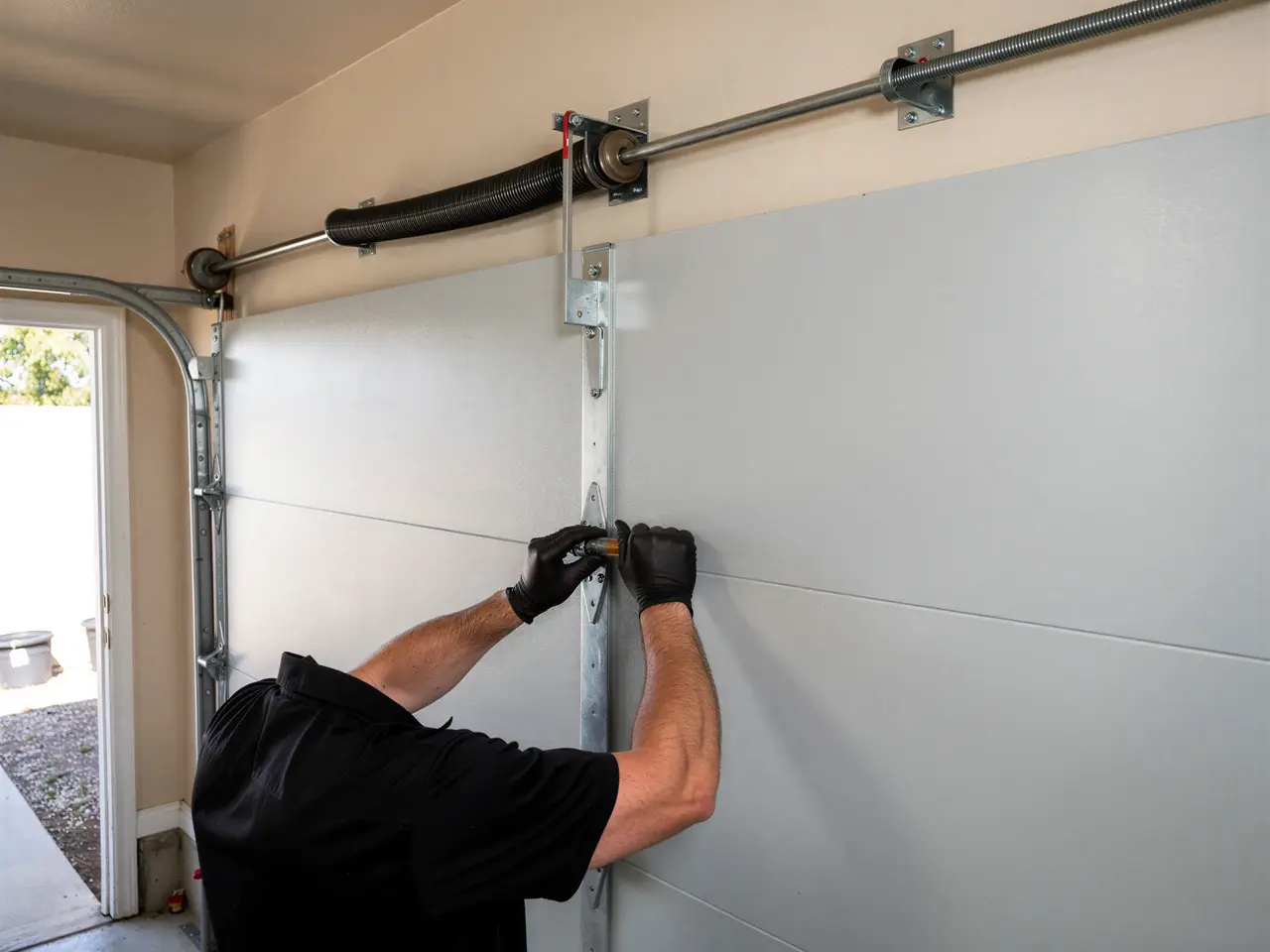
A real tune-up means hands on every moving part, not a spray can and a glance. We check spring tension and balance the door, inspect cables and drums for fraying, lubricate rollers, hinges, and the opener's drive chain or screw, tighten the hardware that vibration has worked loose, and run the door through its full travel to catch binding before it becomes a stuck door at 6 a.m. With roughly 53,016 owner-occupied houses across the service area, a lot of them built in the same ten-year run, we see the identical failure points often enough to know what to check first instead of guessing. One limitation worth saying plainly: if a track is bent or a spring is already past its rated cycles, a tune-up won't fix that - it needs a part swap, and we'll tell you that on the spot instead of charging for a lubrication job that won't hold. We also don't carry every opener logic board on the truck; some models need a part ordered, and we'd rather say that up front than promise a same-visit fix we can't deliver.
How It Shows Up
A door that's overdue for maintenance usually announces itself before it fails outright. Listen for a grinding or scraping sound as the door travels, especially near the top or bottom of the track. Watch for a door that visibly tilts to one side as it opens, which often means one spring has weakened faster than the other. The opener motor straining, humming longer than usual, or reversing partway through a cycle are all signs the mechanical side is working harder than it should. Rust streaks on the track or a track that's pulled slightly away from the wall are worth a look too. None of these on their own means an emergency, but together they're the pattern of a door that hasn't had its hardware checked in a while. Catching it at the squeak-and-strain stage is the difference between a lubrication and adjustment visit and a spring or opener replacement a few months later.
Frequently asked questions
How often should I get my garage door serviced in Rowlett?
Once a year is a reasonable baseline for most houses here, given how much of the local stock was built in the same 1970s-to-2010s window and runs through the same long summer heat. Doors that get heavy daily use, or ones that are already a few years past their last check, benefit from a look sooner rather than later.
Can maintenance stop a spring from ever breaking?
No. A torsion spring has a rated cycle life, and age catches up with every one eventually. What a tune-up does is catch a spring that's close to the end, check balance so the opener isn't overworking it, and fix the smaller issues - dry rollers, loose hardware - before they add extra strain that shortens the spring's life further.
Is a squeaky garage door just annoying, or is it a real problem?
A squeak is usually dry metal on metal, most often a hinge pin or roller bearing. It's cheap to fix with lubrication, but left alone it accelerates wear on the part and on whatever it's rubbing against, including the track. It's one of the easiest things to catch early.
Do you service doors outside Rowlett itself?
Yes, this tune-up service covers the wider area, including homes out toward Heath, Murphy, Sunnyvale, and the other nearby communities we work in. The hardware and housing age patterns are similar enough across the area that the same maintenance approach applies.
Related services
By Neighborhood
Maintenance across the Rowlett area
We also handle maintenance in these Rowlett-area suburbs.
Book garage door service in Rowlett
Call now or request a quote - tell us what the door is doing and where you are.